Every region of Missouri, MO brings its own water damage risks, from coastal humidity to inland flash flooding, and our dispatch network places a licensed crew close enough to respond fast no matter which part of the state you're calling from.
Call +1-844-578-1604 Now
We built our Missouri, MO operation the same way we build every market: hire licensed local techs first, then stock their trucks with commercial extraction and drying equipment before they ever answer a call.
Local pricing matters, and our Missouri, MO estimators quote based on regional material and labor costs instead of a flat number that ignores where in the state the job actually is.
We also carry direct experience working alongside insurance adjusters, so the documentation we generate on day one is already formatted the way most carriers expect to see it.

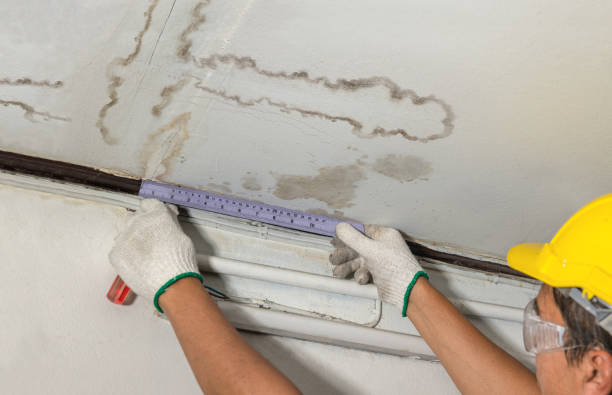
A stain that keeps reappearing after you paint over it is a signal, not a coincidence — the moisture source behind the wall hasn't been addressed and needs a moisture meter reading, not a fresh coat of paint. Repainting without finding the source just hides the problem for a few more weeks.
If opening windows and running a fan doesn't clear the smell within a day, the moisture source is still active and needs professional extraction, not just ventilation. A smell that returns after cleaning is a strong sign the moisture is still present.
Carpet that stays damp or squishy days after you last noticed water is holding moisture against the subfloor, which is exactly the condition that lets mold take hold underneath.
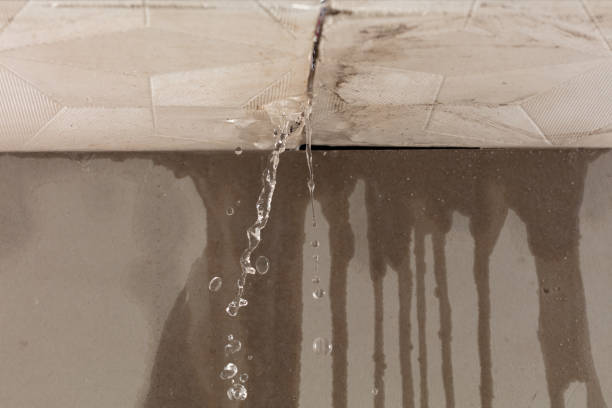
A running-water sound when every fixture in the house is off is a strong sign of a hidden leak feeding your rising bill.
Wallpaper that lifts at the seams after being fine for years is often a sign that humidity or a slow leak has changed the moisture level inside that wall.
Dark spotting in grout lines or around window frames is often the first visible sign of a moisture problem that's been developing for weeks.
We treat Flood Damage Cleanup as one continuous job rather than a series of handoffs — the crew that extracts the water is accountable for the drying results, and the drying results determine what reconstruction is actually needed.
Our crews arrive with truck-mount extraction units capable of pulling thousands of gallons per hour, using moisture meters to classify the water as Category 1, 2, or 3 before drying even starts.
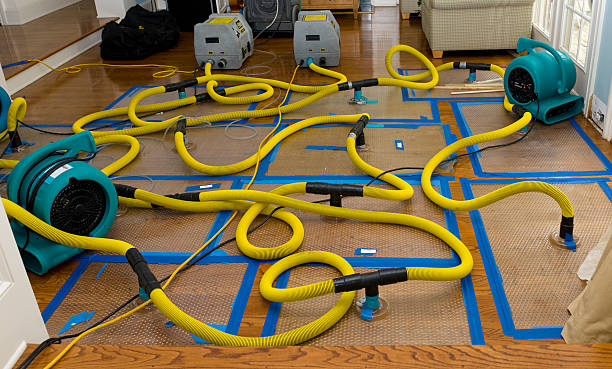
Equipment placement isn't guesswork; it's calculated from psychrometric readings taken at the start of the job and adjusted daily as conditions change.
Category 3 blackwater intrusions require full PPE, controlled demolition of porous materials that can't be sanitized, and hospital-grade antimicrobial treatment before reconstruction begins.
Once structural drying is underway, we apply antimicrobial treatments to studs, subfloor, and other porous surfaces to stop mold colonies before they establish, especially in areas that stayed wet more than 48 hours.
The same team that documented the damage and dried the structure hands off directly to reconstruction, which keeps the whole timeline shorter and the paperwork simpler.
Furniture, documents, and electronics affected by water intrusion get assessed on-site, with salvageable items cleaned and stored while unsalvageable items are documented for your claim.


Dispatch asks enough to prep the right equipment before the truck even leaves, so the crew isn't guessing what they'll find on arrival.
The assessment sets the entire plan — skipping it or rushing it is how jobs end up with hidden moisture pockets months later.
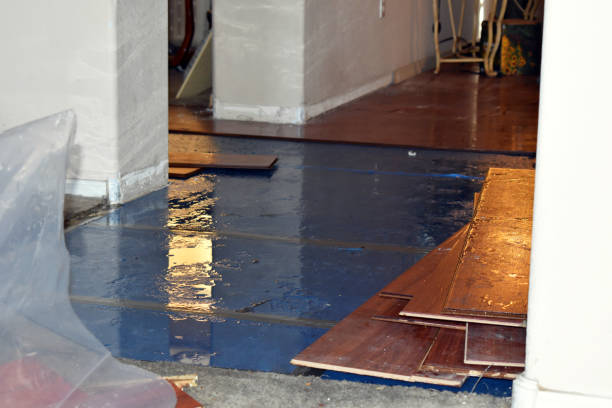
Standing water comes out first with truck-mount equipment, then air movers and dehumidifiers go to work based on the psychrometric numbers we recorded.
Final verification is where a lot of shortcuts get taken industry-wide — we treat it as mandatory, not optional.
Insurance and licensing aren't just paperwork here — they're what let us stand behind the work if something doesn't go as planned.
A crew close by isn't a marketing line — it's the difference between drying equipment running in an hour versus waiting half a day.
You get a written estimate before work begins, not a surprise invoice after the drying equipment is already running.
If a drying target isn't met on the first pass, we extend equipment placement at no extra charge until moisture readings confirm the structure is dry.
If our moisture readings don't hit a safe drying standard on schedule, we keep equipment on site at no additional cost until they do — that's the standard we hold ourselves to.
Our technicians don't get paid faster by closing jobs early, which keeps the incentive aligned with actually finishing the drying properly.
Call +1-844-578-1604Aqua Guard Water Damage maintains regional crews across Missouri, MO, positioned so that no metro area is left waiting on a truck from the other side of the state.
As Missouri, MO grows, so does our crew count — we add regional capacity rather than stretching one central office thinner.

"The team here in Missouri, MO treated our emergency like it actually mattered, not like another ticket in a queue, and the drying documentation they left us was thorough enough to hand straight to our insurer."
James R., Missouri, MO"Our basement took on water during a storm and the crew classified it, extracted it, and had dehumidifiers running the same afternoon. The final invoice matched the upfront quote exactly."
Denise M., Missouri, MO"Professional from the first phone call to the final walkthrough. They re-tested moisture levels before closing the job instead of just eyeballing it."
Marcus T., Missouri, MO"Fast response, clear pricing, and they coordinated directly with my insurance adjuster which saved me a huge headache during a stressful week."
Priya S., Missouri, MO"We had a slow leak we didn't notice for weeks and the crew found moisture in places we never would have checked using thermal imaging."
Carlos V., Missouri, MO"They minimized business disruption by sectioning off the wet area instead of shutting down the whole space during drying."
Angela F., Missouri, MO"A cracked supply line under the kitchen sink went unnoticed for days and by the time we called, the subfloor was saturated. The crew pulled the damaged material and had drying equipment running within the hour."
Tyrone B., Missouri, MO"They explained the sump discharge issue causing our crawl space flooding in plain terms and fixed it as part of the same visit instead of scheduling a separate appointment."
Wendy K., Missouri, MO